Persistent Tightness
When an area loosens for a minute, then locks back down as soon as you move again.
Soft tissue therapy helps when muscles, fascia, and surrounding tissue are still blocking better movement. Restriction at the tissue level limits range, forces compensation into other structures, and prevents recovery from building on itself, regardless of what else you are doing right.
When an area loosens for a minute, then locks back down as soon as you move again.
When tissue restriction is one reason the joint or limb still cannot move the way it should.
When the body is still guarding hard enough to keep better movement from showing up.
When the restriction that limited movement before treatment is still present and still limiting it.
Functional rehab is the foundation here. Tissue work that is not pointed at a plan produces a change that fades: the range opens, then the same load pattern pulls the restriction back. Soft tissue work earns its place by clearing that restriction, which opens a window to train the movement more effectively.
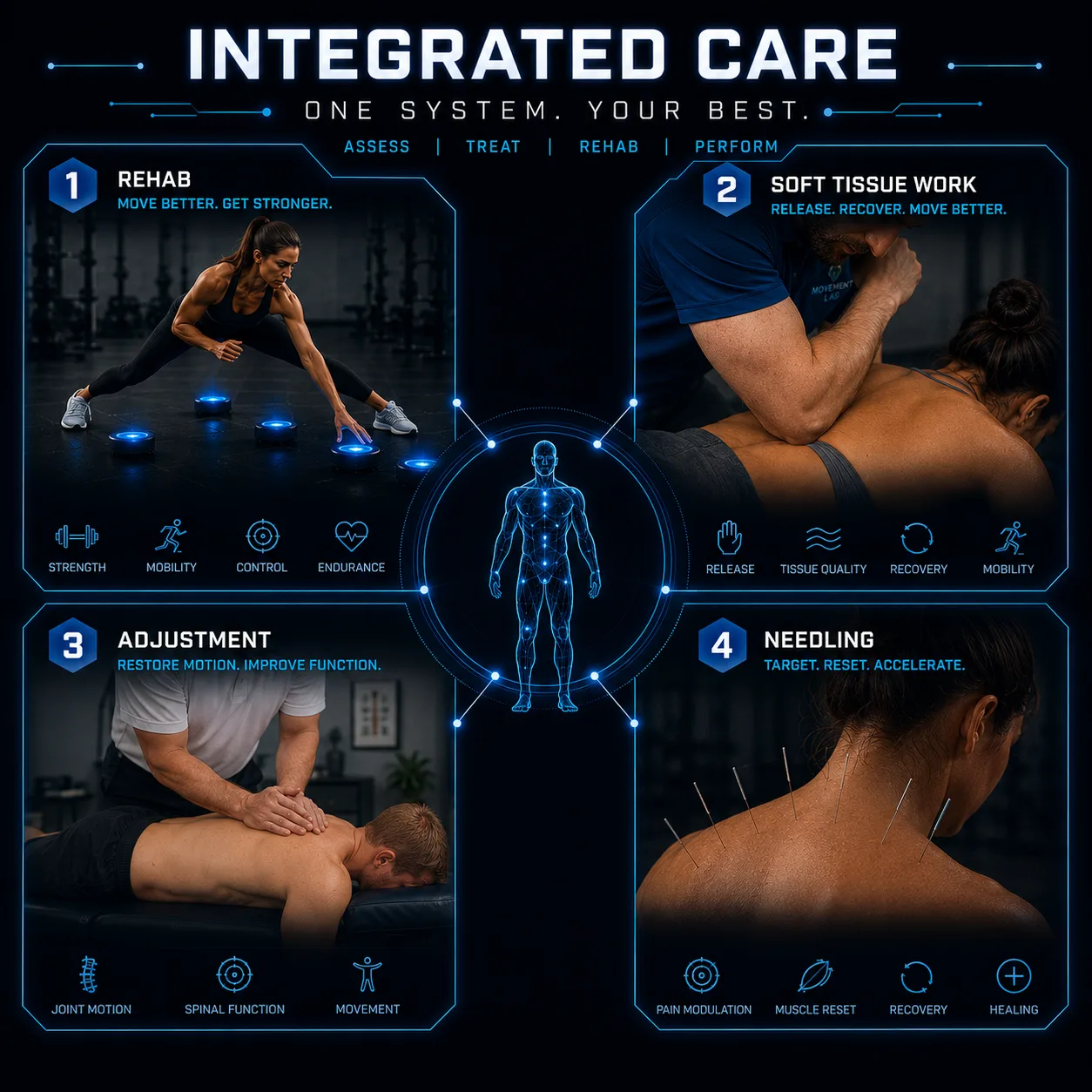
That is the order the plan runs in. The exam finds whether the tissue is the barrier, the hands-on work changes what the tissue allows, and the rehab that follows teaches your body to hold the new motion instead of drifting back. Adjustments and dry needling layer in the same way, each used where the exam calls for it.
The Stecco method identifies specific points in the fascia where density has built up and normal gliding between layers has been lost. Treatment is applied to those points directly: not at the site of pain, but at the fascial locations driving the restriction pattern.
After a brief isometric contraction of a restricted muscle, the nervous system produces a window of reduced tone. The technique uses that window to restore length and reduce the protective tension pattern holding the restriction in place.
Stainless steel instruments are used to identify and treat areas of fibrotic tissue change and fascial restriction. The tool allows more specific contact with restricted tissue than hand pressure alone.
Negative pressure is applied to the skin and superficial tissue to create a decompressive load on the underlying fascia and muscle. Where direct pressure compresses tissue, cupping lifts it, a different mechanical input that reduces tone and improves tissue mobility in restricted areas.