Low Back Pain
Better for a few days, then one wrong move brings it right back.
You know the exact thing you can’t do anymore. Get down on the floor with your kid and back up without a plan. Run without paying for it the next day. Reach the top shelf without the shoulder reminding you. Whether it started with an injury, a flare that keeps returning, or a diagnosis you were handed, the label matters less than the movement it took. We start there: at what is limiting it now, and what it takes to give it back.
A back that seizes when you bend to tie a shoe. A knee that gave out once and never felt trusted again. A diagnosis that arrived with a list of things you were told to stop doing. Different stories, same problem: a movement you want is off the table.
Your diagnosis matters, and we want to hear all of it. It is just not the whole story of what you can still do. So we start with you: the movement you want back, and what is standing between you and it. Sometimes that is a joint that stopped sharing load. Sometimes it is a stabilizer that went quiet and never switched back on. The cause changes the plan. It does not change where we start.

A few of the patterns that bring people in. If yours is not on the list, the evaluation still starts the same way: at the movement, not the label.
Better for a few days, then one wrong move brings it right back.
Stiff in the morning, locked up by the end of the day, never fully gone.
Burning or shooting symptoms that flare with sitting, bending, or no warning at all.
Overhead reaching hurts, sleep is affected, and the same range keeps feeling blocked.
Stairs, squats, and standing up after sitting are the moments that expose it.
That first step out of bed is sharp, then the cycle starts again.
Recurring. Hard to predict. Hard to get ahead of.
Gripping, lifting, turning a door handle. The elbow that won't stop complaining.
The evaluation does not start with what hurts, or with the label you walked in with. It reads how the movement works now: what is limiting it, what is compensating, and what the pattern has been missing. That picture guides everything that follows.
Treatment targets the structure the evaluation flagged as the limitation, not the site that produced the symptom. When the right structure is addressed first, the body has less reason to compensate, and movement changes rather than just hurting less.
The change made in treatment has to survive contact with real load: training, sport, the job, the floor you want to get up from. Rebuilding is how that transfer happens.
Rehab here reads how you breathe, brace, and position your joints under load, finds the pattern that keeps sending stress to the same place, and rebuilds it. Hands-on work can change what a joint does in a session. Pattern work is what changes what your body does on its own.
The hands-on work is sequenced around it, not stacked on top. Restriction gets cleared before the movement is reloaded. Joint mechanics get addressed before the pattern work starts. Each layer sets up the next, which is why the order is a clinical decision and not a menu.
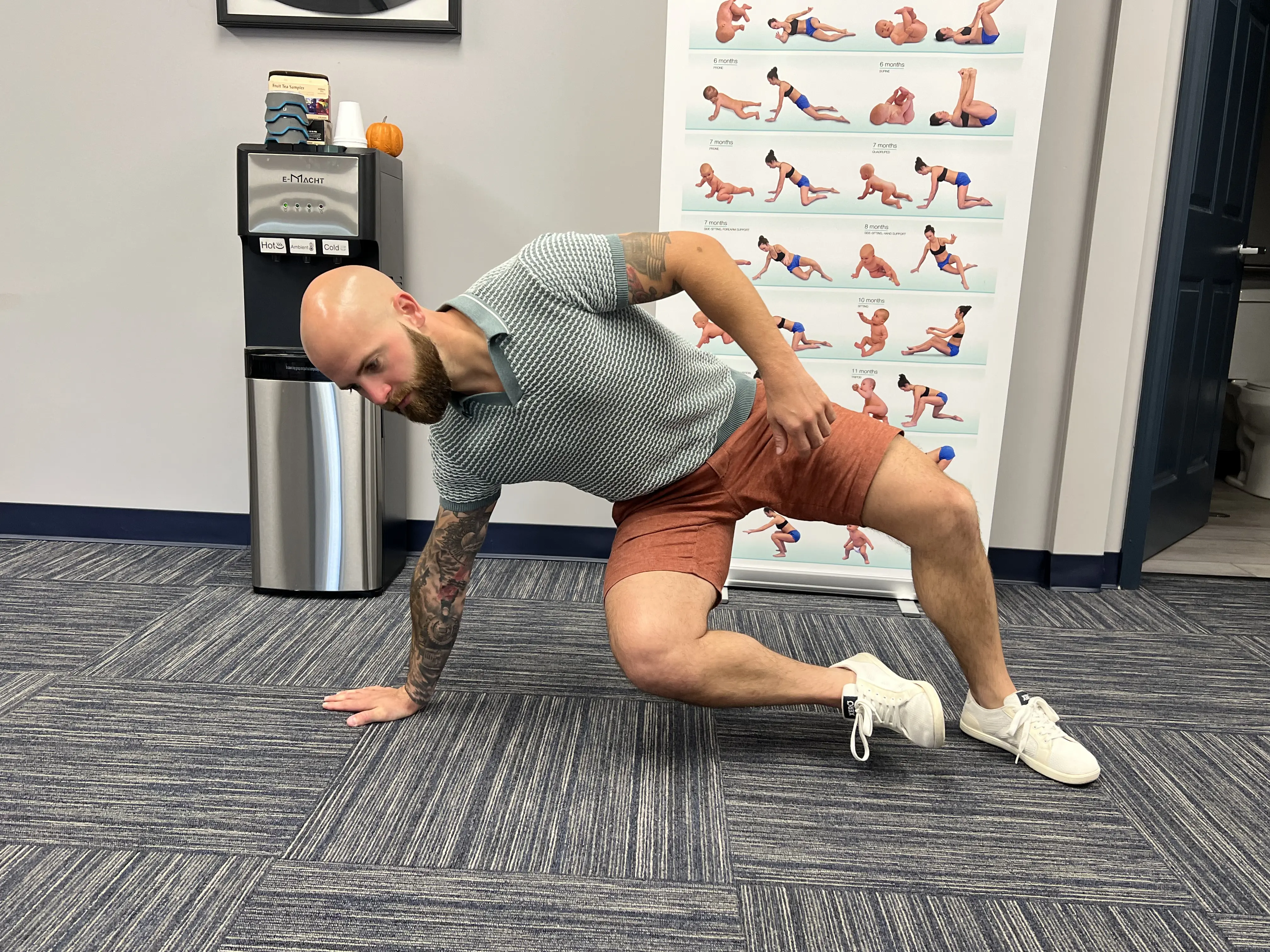
Which of these belong in your plan, and in what order, comes out of what the evaluation finds.
The foundation of the Movement Lab. First, DNS restores the right patterns. Then you transfer them to your sport, your work, your day.
Explore Functional RehabSpecific, movement-informed adjustments used to restore joint mechanics when a segment is not moving or sharing load the way it should.
See How Adjustments FitTissue work that clears up restrictions so the body can move differently instead of getting pulled right back into the same compensation.
When Soft Tissue Therapy HelpsA targeted tool for muscles and tendons that are not responding to stretching, rest, or basic care.
See When Dry Needling HelpsYou have a movement you want back, and you will do the work between visits to get it. Whether that is a squat rack or the stairs, you would rather fix the pattern than manage around it.
Your goal is managing symptoms between flares rather than solving what is driving them. That is a real need, and there are practices built around that model.
“Everyone I went to focused on the pain, but they all brushed aside the severe numbness. Marshall listened intently to all of my concerns and had me feeling so much better after my first session than in months of care from other providers.”— Zoe Maffit
“I had a bad back injury from a workout accident. I went from unable to get out of bed to completely healed up.”— Luke Lack
“In a span of 3 months, nearly all of the pain I’ve had is gone when engaging in those activities now. You’ll likely end up stronger than you can remember without needing regular assistance.”— Nathan Wilkening